
 By
By 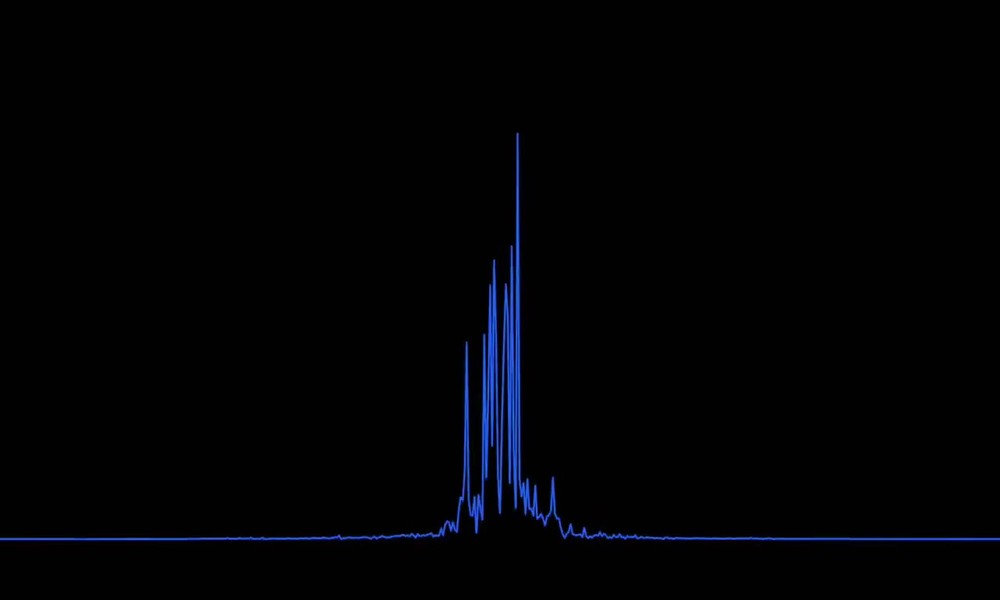
The ability to generate realistic audio from scratch – music, speech, sound effects, and more – has advanced considerably in recent years. One of the most significant breakthroughs driving this progress is audio diffusion, a technique that draws on the same mathematical principles behind image generation models like DALL·E and Stable Diffusion, but applies them to sound.
At its core, audio diffusion works by learning to reverse a gradual noise process. A model is trained to take a signal corrupted with random noise and recover a clean, coherent audio output. For anyone enrolled in or considering a generative AI course in Pune, understanding audio diffusion is increasingly relevant as the technology finds its way into music production, speech synthesis, and creative tooling.
How the Noise Process Works
To understand audio diffusion, it helps to start with the concept of a forward diffusion process. During training, a clean audio sample – say, a recording of a piano – is progressively corrupted by adding small amounts of Gaussian noise at each step. After enough steps, the original signal becomes pure noise with no discernible structure.
The model then learns to reverse this process. Starting from random noise, it iteratively removes small amounts of noise at each step until it recovers a clean, structured audio signal. This reverse process is guided by a neural network – typically a U-Net or Transformer-based architecture – that has learned the statistical patterns of real audio during training.
The key insight is that this denoising process, when applied correctly, produces audio that reflects the learned distribution of the training data. The model does not memorize individual samples. Instead, it learns the underlying structure of sound itself.
Audio Representations: Working in the Right Domain
One important design choice in audio diffusion models is the domain in which the diffusion process operates. There are two primary approaches:
Waveform-based diffusion operates directly on the raw audio waveform – the time-domain representation of sound. Models like WaveGrad and DiffWave work in this space. They are computationally intensive but preserve fine-grained audio detail.
Spectrogram-based diffusion converts audio into a spectrogram – a 2D visual representation of frequency over time – and applies the diffusion process there. This approach treats the problem similarly to image diffusion, which makes it easier to apply existing techniques. The generated spectrogram is then converted back to audio using a vocoder. Models like AudioLDM and Stable Audio use this approach to produce high-quality music and sound effects.
Each method has trade-offs in terms of computational cost, audio fidelity, and controllability. Practitioners who study these distinctions as part of a generative AI course in Pune gain practical insight into choosing the right approach for a given application.
Conditioning and Control
One of the most useful aspects of audio diffusion is the ability to condition the generation process. Conditioning means guiding the model toward a specific type of output using additional inputs.
Common conditioning approaches include:
- Text prompts: Describing the desired audio in natural language (e.g., “a calm acoustic guitar melody”). Models like AudioLDM 2 and MusicGen support this.
- Mel-spectrogram conditioning: Providing a rough tonal structure that the model refines.
- Class labels: Specifying a category such as “rain,” “crowd,” or “engine.”
- Reference audio: Providing a sample that the model uses as a stylistic anchor.
These conditioning mechanisms make audio diffusion models highly versatile. They are already being used in professional music production software, game audio pipelines, and accessibility tools that generate descriptive soundscapes for visually impaired users.
Challenges and Current Limitations
Despite the impressive progress, audio diffusion models still face meaningful challenges:
- Inference speed: Iterating through many denoising steps is slow. Techniques like DDIM sampling and consistency models help reduce this, but latency remains an issue for real-time applications.
- Long-form generation: Most models handle short clips well but struggle to maintain coherence over longer durations without additional architectural changes.
- Evaluation difficulty: Measuring audio quality objectively is harder than in image generation. Metrics like Fréchet Audio Distance (FAD) exist but are imperfect proxies for human perception.
Active research is addressing each of these areas steadily.
Conclusion
Audio diffusion represents a meaningful shift in how machines generate sound. By learning to reverse a structured noise process, these models can produce audio that is diverse, controllable, and often strikingly realistic. The underlying principles – denoising, conditioning, and iterative refinement – are shared across many generative AI domains, making this a foundational concept well worth studying.
If you are building skills in this space through a generative AI course in Pune, audio diffusion offers a clear window into how modern generative models work and why they are so effective. From speech synthesis to creative music tools, its applications are already reshaping how audio content is made.






Comments